

By Alessandra Duval, PYP Teacher, International School of Breda, Netherlands.

As a child, I felt intimidated by maths. It felt like a subject where you either got it or didn’t, and I didn’t. Lessons were all about memorising steps and following rules without understanding why. I remember sitting quietly, afraid to ask questions, and feeling like maths was something you just had to endure.
As a team, we realised that the way we were teaching maths was not helping students truly think or engage with ideas. Our lessons often followed a pattern of I show, you do, where students practised set strategies on worksheets without much discussion or collaboration. This approach felt limiting and disconnected from how children naturally learn. While this approach covered content, it didn’t spark curiosity or deep thinking.
When our school encouraged us to explore new teaching methods, three colleagues and I formed a Maths Development Team. Two books transformed our thinking: Jo Boaler’s The Elephant in the Classroom and Peter Liljedahl’s Building Thinking Classrooms. Their research showed that students learn best when they work together, stand up, share ideas, and actively participate in problem-solving.
How it works
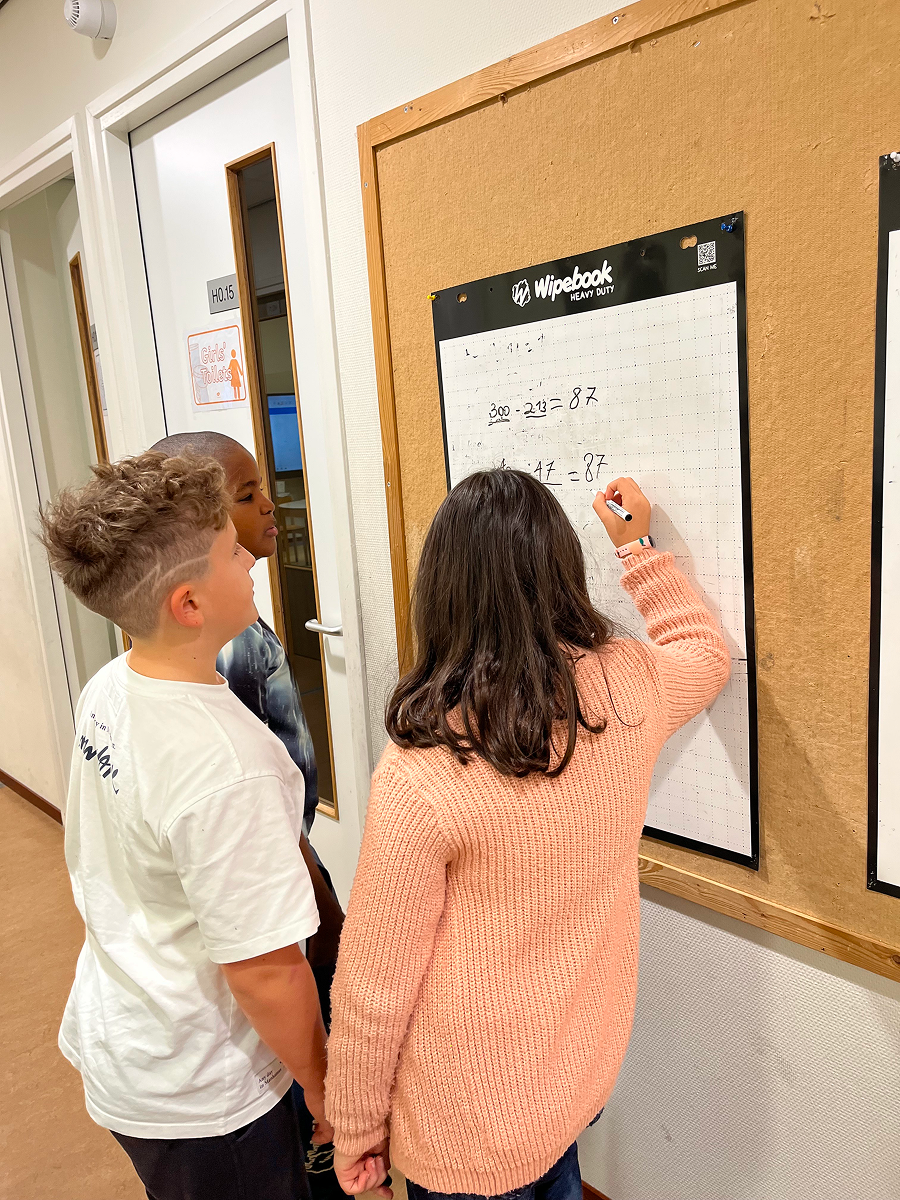
Students work in random groups of three, chosen using a tool called Wheel of Names. Each group has three roles:
- The scribe, who writes ideas on the board.
- Two strategic thinkers, who explore strategies and discuss solutions.
Roles rotate, allowing everyone to have a chance to lead and contribute. This builds confidence and helps students see problems from different perspectives.
Choosing the right tasks
The method works best with short, verbal tasks, such as puzzles or problems that encourage thinking and discussion, rather than long exercises. Tasks can come from the curriculum or be non-curricular challenges. The key is that they allow students to explore ideas without getting stuck on complicated instructions or too much writing.
Why it fits the PYP
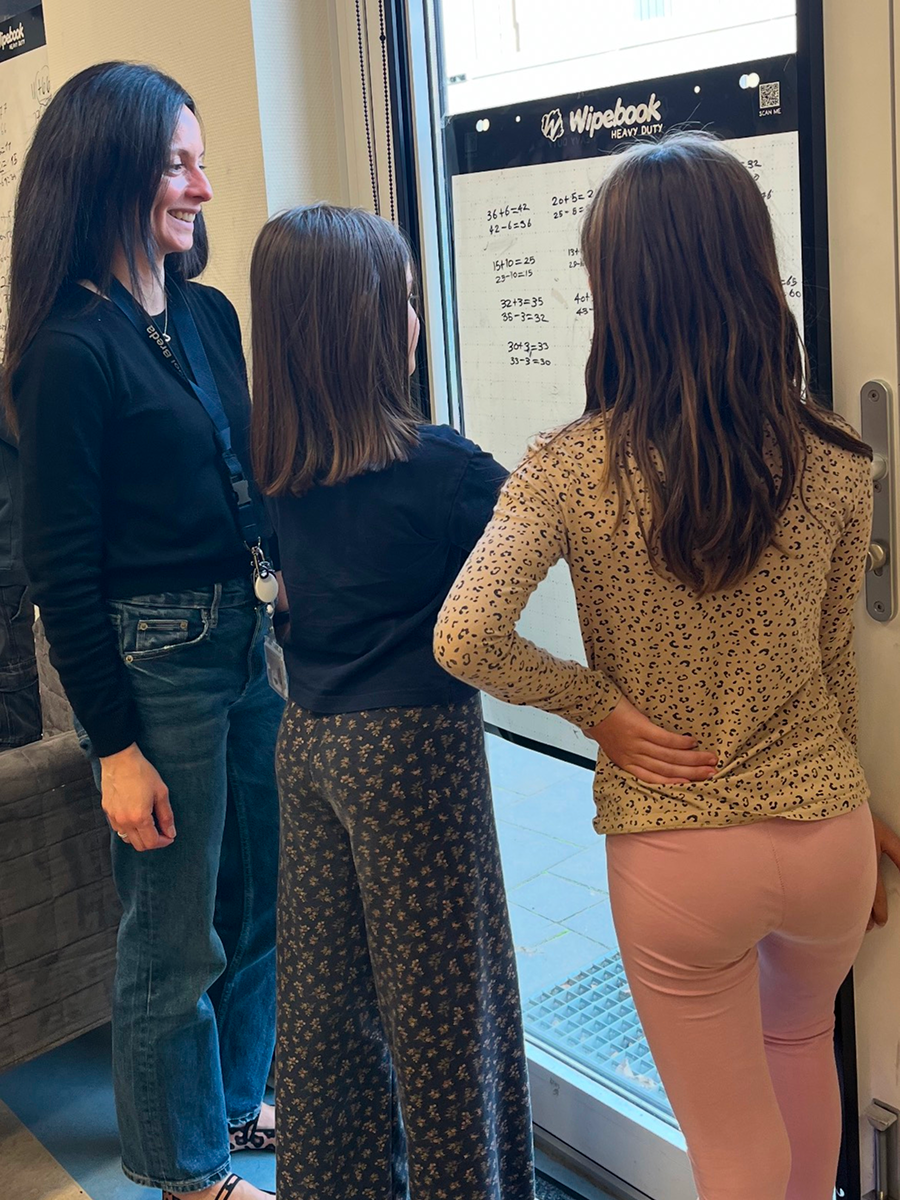
This approach aligns perfectly with inquiry-based learning and learner agency. The teacher speaks for only five minutes at the start, giving just enough information for students to begin. Then students take the lead, exploring, discussing, and solving problems together. They think deeply, communicate ideas, collaborate, and make decisions about their learning. This gives them real agency and helps them discover understanding for themselves.

Impact on students
Initially, students were unsure about this new approach to working, but now they look forward to their maths lessons. They take risks, feel less worried about mistakes, and understand many ways to solve problems. Engagement and confidence have grown noticeably.
One of the most exciting outcomes is hearing students reflect on their learning. Recently, a group discovered they could use inversion to check answers, something I hadn’t taught yet. In another lesson, a student introduced the concept of negative numbers after noticing an error. These moments demonstrate how students are thinking deeply, supporting one another, and discovering new strategies independently, which is precisely what this method encourages.
Assessment and reflection
For now, assessment is informal. We listen to conversations, ask questions, and observe how students approach and solve problems. At the end of lessons, students often write notes to their “future forgetful self,” recording strategies or ideas they want to remember. This helps consolidate learning and supports independent thinking.
Sharing and scaling up
Currently, one other teacher and I are using the approach in its entirety, but interest is growing as we explore the method, learn from our experiences, and then share our insights with the rest of the team. Other teachers are utilising more transdisciplinary opportunities to teach math, demonstrating how students think deeply, support one another, and discover new strategies independently. This approach is particularly effective in the concept of negative numbers, as evidenced by the Early Years teachers' use of more hands-on, collaborative activities.
Maths is now my favourite subject
Looking back, I wish I could have learned math this way, standing, talking, sharing ideas, and discovering strategies with others. It would have changed everything for me as a child. Today, it has changed everything for me as a teacher. Math is now my favourite subject to teach because I see students thinking deeply, collaborating, and enjoying the process. It’s no longer about memorising steps; it’s about making sense of ideas together, and that’s what learning should feel like.
Takeaways
- Start small: Begin with vertical non-permanent surfaces, random groups, and thinking tasks before adding other elements.
- Choose the right tasks: Short, verbal problems work best for collaboration and discussion.
- Rotate roles: Give every student a chance to lead and contribute.
- Focus on inquiry: Keep teacher talks brief and let students take the lead in exploring and problem-solving.
- Build ATL skills naturally: Collaboration, communication, thinking, and self-management grow through this process.
- Expect a transition period: Students may initially feel unsure, but engagement and confidence will increase.
- Read the research: Jo Boaler’s The Elephant in the Classroom and Peter Liljedahl’s Building Thinking Classrooms provide practical guidance and inspiration.
