

By Basanti CS, Head Early Primary and Alpa Thakker, PYP Teacher, Math Lead -Early Primary Wing, Silver Oaks International School, Hyderabad, India.

Have you ever watched a child’s face light up when they discover something on their own? That spark, that “Oh! I noticed something!” moment, is what inquiry-based learning is all about. For us, this approach transformed early years math from a set of steps into a world of patterns, connections, and curiosity.
Why inquiry?
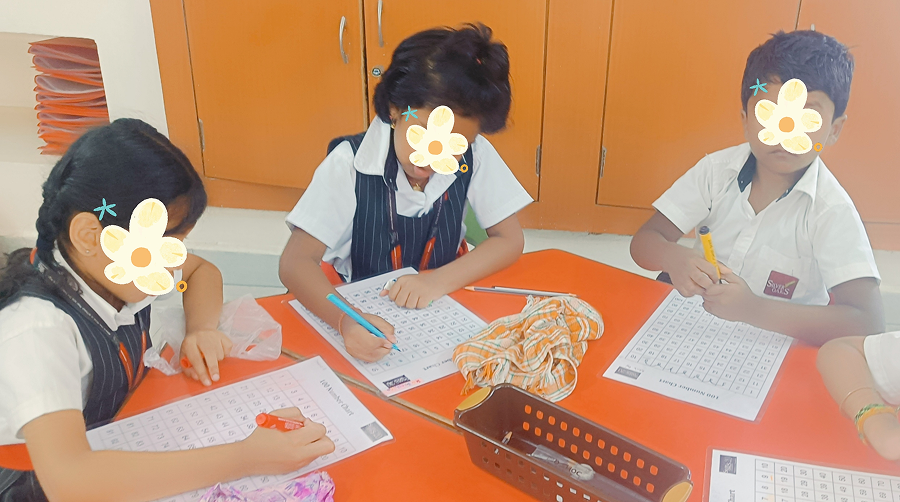
We’ve always believed that young children learn best when they explore freely. When math is experienced, not memorised, children begin to see how numbers connect in meaningful ways. Inquiry gives them space and agency to think, reason, and solve problems. And here’s something we’ve learned over time: math strategies aren’t taught, they’re caught. When children play with numbers and experiment with tools like the 100-chart, they naturally discover effective strategies. Often, no one needs to tell them how to add 10 or 11; they figure it out on their own. Those discoveries stick.
Inquiry vs traditional math
In a traditional classroom, math often means following steps and practising procedures. Students might get the right answers, but the joy and depth of understanding? Often missing. With inquiry, everything changes. Children become thinkers, not just doers. They notice patterns, test ideas, and share discoveries with peers. They start asking “why” and “how,” not just “what.” Suddenly, math feels alive—something they see everywhere, not just in notebooks.
The magic of the 100-chart
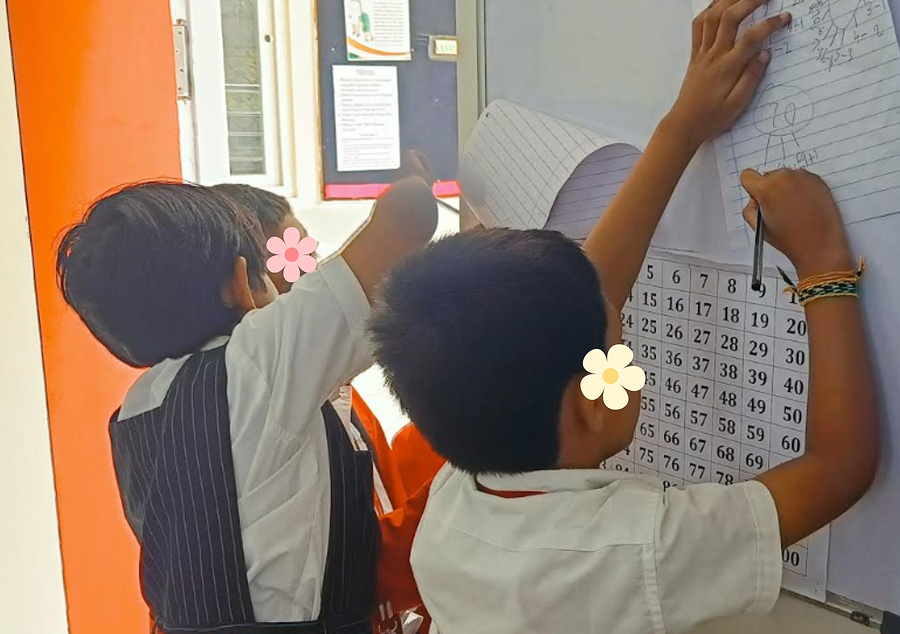
One of our biggest surprises? The humble 100-chart. It’s simple, familiar, and affordable, but incredibly powerful. It helps children visualise number relationships, spot patterns, and discover strategies independently. Something so basic turned out to be a game-changer.
Tools that make inquiry fun
Hands-on tools, such as number lines, ten frames, and Unifix cubes, provide children with multiple ways to see and understand numbers. Digital resources can also add another layer, letting students explore and self-correct virtually. However, nothing beats the tactile experience of physical manipulatives for building a genuine understanding.
To do this, we give children base ten blocks to explore. They play with them. Some students count each cube and explore how they can group them into blocks of 5 or 10. They understand the magnitude of numbers. It is easier for children to visualise when they engage with manipulatives.
Supporting every learner
Inquiry works for everyone, but it looks different for each child. Struggling learners benefit from multisensory approaches and gentle questioning, such as asking, “What do you notice?” “Can you count by 10s?” Advanced learners take inquiry further, spotting complex patterns and creating their own challenges. This flexibility keeps the classroom inclusive and energised.
What we learned
Inquiry takes patience and flexibility. Students don’t discover patterns at the same pace, and that’s okay. We learned to slow down, trust the process, and give space for exploration. Over time, students transitioned from asking simple questions, such as “Is this correct?” to more analytical ones, like “Can I use this chart to do multiplication?” That shift showed real conceptual growth.

Takeaways
- Inquiry builds deep understanding – Children learn best when they explore, question, and discover, rather than just following steps.
- Simple tools can be powerful – The 100-chart is affordable, familiar, and rich in opportunities for pattern recognition and strategy building.
- Balance hands-on and digital resources – Physical manipulatives foster tactile learning, while digital tools support reinforcement and self-correction.
- Patience and flexibility are essential – Inquiry takes time. Trust the process and allow students to grow at their own pace.
- Collaboration and reflection matter – Peer interaction and reflective questioning help students articulate their thinking and build confidence.
