

Ruhina MD, Grade 2 PYP Teacher, Fazlani L'Académie Globale, Mumbai, India.

There’s a special kind of energy in a classroom when a student leans forward, eyes bright, and asks, “But what if…?” That moment, when curiosity takes the lead, is when real learning begins.
Questions at the heart of learning
In our Grade 2 PYP homeroom, questions aren’t just welcome but essential. They spark curiosity, unlock new perspectives, and guide inquiry. Over time, I’ve realised that teaching isn’t about giving students the right answers; it’s about helping them ask better, deeper questions. Watching that shift unfold has been transformative, not just for my students but also for me as an educator.
Turning thoughts into questions
We use structured questioning routines to foster critical thinking and thoughtful reasoning. One of our favourites is the Hot Seat, where a student becomes the “math expert” and fields questions like:
- “How did you solve this?”
- “What strategy did you use?”
This simple shift turns problem-solving into powerful peer learning.
In literacy, questions such as “If you were the main character, what would you do differently?” prompt students to explore perspectives, make predictions, and think empathetically — all through the lens of inquiry.


From wonder to wisdom: deepening inquiry
When exploring Earth’s landforms, we began with a See–Think–Wonder routine to activate thinking around the concept of Form. Their initial wonders quickly evolved when we introduced the Pencil Routine, guiding them to refine broad ideas into sharper, more focused questions.
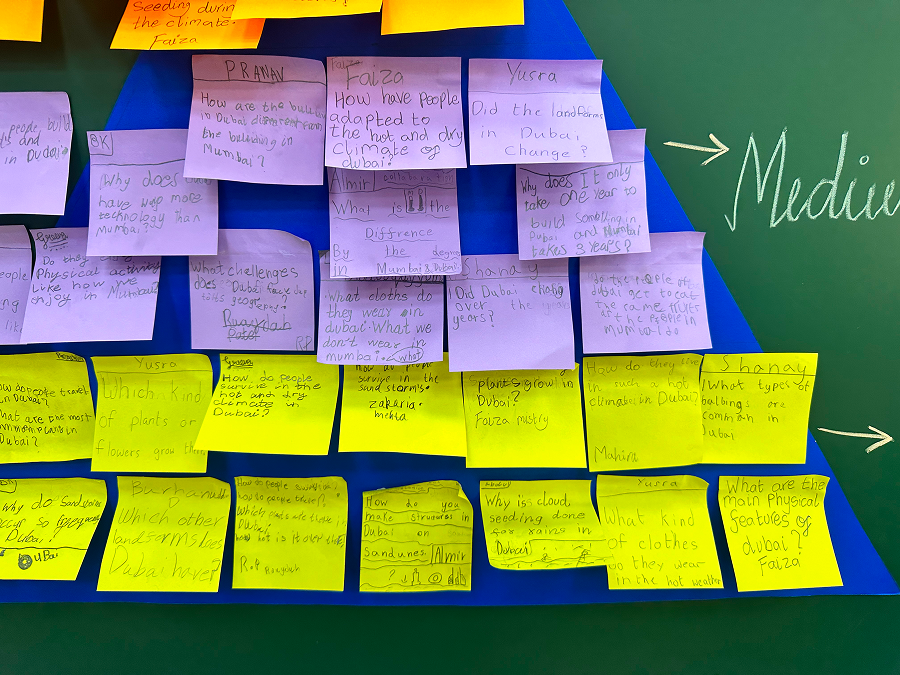
But the real game-changer? The Triangle Question Routine. Students classified their questions as shallow, medium, or deep. Before a collaboration session with a school in Dubai, we practised this routine to sharpen our questioning skills. One student transformed a “thin” question like:
- “Why do sandstorms occur so frequently in Dubai?” into a deeper one:
- “Are the new skyscrapers strong enough to withstand frequent sandstorms?”
This shift showed the power of student-led reasoning, conceptual understanding, and a growing capacity for independent inquiry.
What If…? The spark of imagination
As our inquiries developed, students embraced bold What If questions that pushed the boundaries of imagination and systems thinking:
- “What if mountains reached space?”
- “What if cities floated on water?”
These questions opened new pathways for creativity, expanded thinking, and kept our Wonder Wall buzzing with life. Students often revisited their questions to revise or extend them — a sign of ownership and growing intellectual curiosity.

Round table talks: inquiry in action
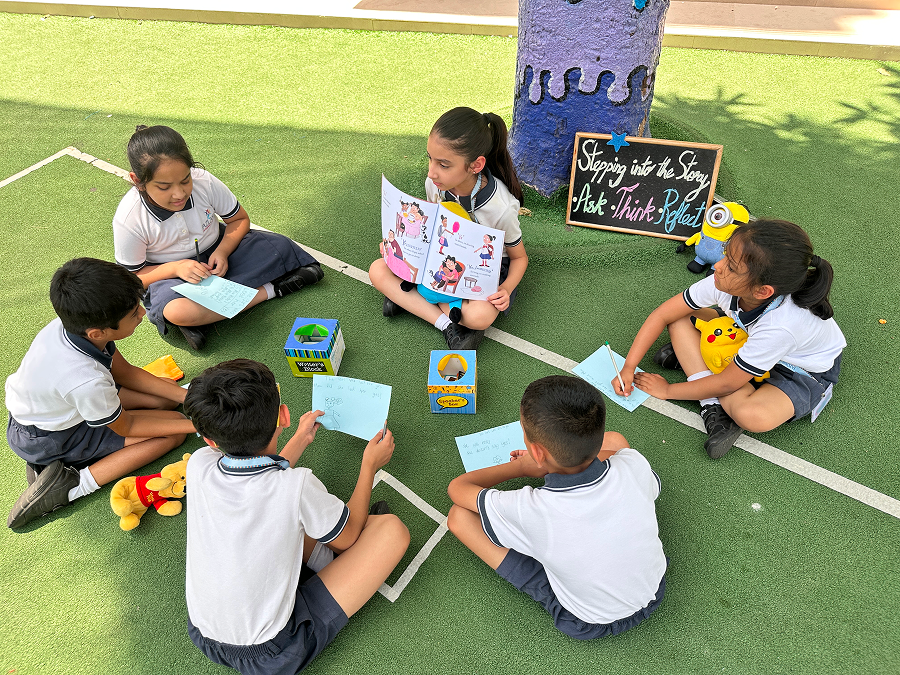
In our Round Table Talks, students designed future settlements using specified concepts as thinking lenses. They shared ideas, asked each other questions, and offered feedback and feedforward. One student said:
“I love how your houses have solar panels — what if you also included a garden to grow food and help the environment?”
Every voice mattered. Every idea sparked another.

From teacher-led to student-led
This movement from teacher-led routines to student-led inquiry has been deeply rewarding. I’ve watched learners grow from asking simple “what” questions to posing complex “why” and “how” questions. They challenge assumptions, seek clarity, and extend conversations naturally.
Reflections: asking is learning
Through this process, I’ve learned to step back and listen. Some of the most powerful moments came from questions I never expected. In our classroom, asking isn’t just part of learning — it is learning.


Takeaways
- Cultivate curiosity: Create space for students to ask questions before offering answers.
- Use routines creatively: Try Hot Seat, Pencil Routine, and Triangle Question Routine to scaffold inquiry.
- Celebrate complexity: Encourage students to revise and deepen their questions.
- Empower ownership: Let students lead discussions, design solutions, and challenge each other’s thinking.
- Listen generously: The best questions often come when we least expect them.
