

By Ms Evi Singleton, Head of School, Zhuhai International School, Guangdong, China
Starting with a question
Sometimes the best ideas begin with a moment of reflection.
In October 2025, our leadership team attended a conference on Sustainability in Education, where we learned about a climate challenge for secondary students led by Mr Paul Lin, Co-chair of the Climate Change Challenge at the Saïd Business School, University of Oxford. We saw its value immediately and knew older students would benefit from it.
But it also made us stop and think.
It made us ask a bigger question: if we want young people to become lifelong changemakers, should we start earlier?
We realised there was an opportunity to introduce climate action in an age-appropriate way for Primary Years Programme (PYP) students, helping them develop curiosity, creativity, critical thinking and problem-solving through real-world challenges.
That conversation became the foundation of the Primary Climate Action Showcase.
Planting the seeds of change
From the outset, our goal was simple. We wanted students to believe that their ideas mattered.
Young learners bring imagination, curiosity and optimism. They are willing to experiment, take risks and try new approaches without worrying too much about getting things wrong.
We wanted students to ask their own questions, explore meaningful issues, collaborate and learn through trial and error. We also wanted them to see setbacks as part of learning, building resilience by reflecting, adapting and trying again.
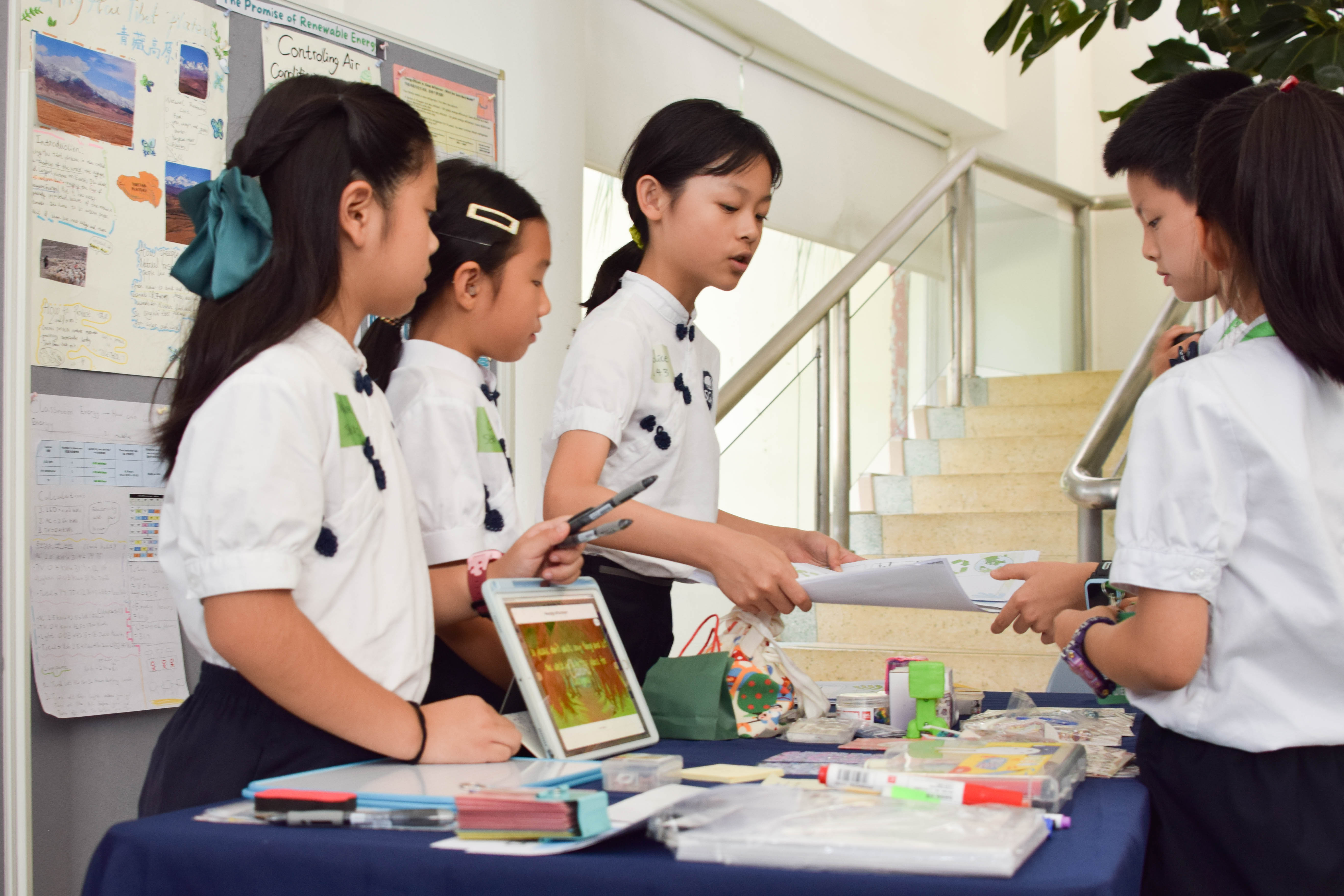
As the showcase unfolded, students shared discoveries and ideas, creating a genuine sense of community and purpose. They experienced many of the inquiry processes they will later encounter during the PYP Exhibition, but in a way that felt authentic and exciting.
Building a community of learners
The idea gained momentum quickly.
Shortly after the conference, we contacted Mr Paul Lin to share our vision. His response was encouraging and supportive, offering guidance while giving us freedom to design something suited to our context.
Our Primary Principal and PYP Coordinator, Mr Ferris, immediately recognised the connection to the PYP. Together, we identified Sharing the Planet as the ideal unit of inquiry to anchor the work.
As planning progressed, we invited other schools to participate. Mr Ferris introduced the idea at a PYP Coordinator network event in the Greater Bay Area, opening the door for wider collaboration.
What began as a school-based initiative quickly became a shared project involving multiple schools, united by a common goal: empowering young learners to see themselves as changemakers.
Tackling big issues through young eyes
For students in Grades 3–5, the challenge needed to feel meaningful without becoming overwhelming.
Rather than asking students to solve climate change itself, we encouraged them to focus on specific issues, including air pollution, biodiversity, food security, water scarcity and extreme weather events.
The results were remarkable.
Students approached complex challenges with creativity, empathy and practicality. Projects included:
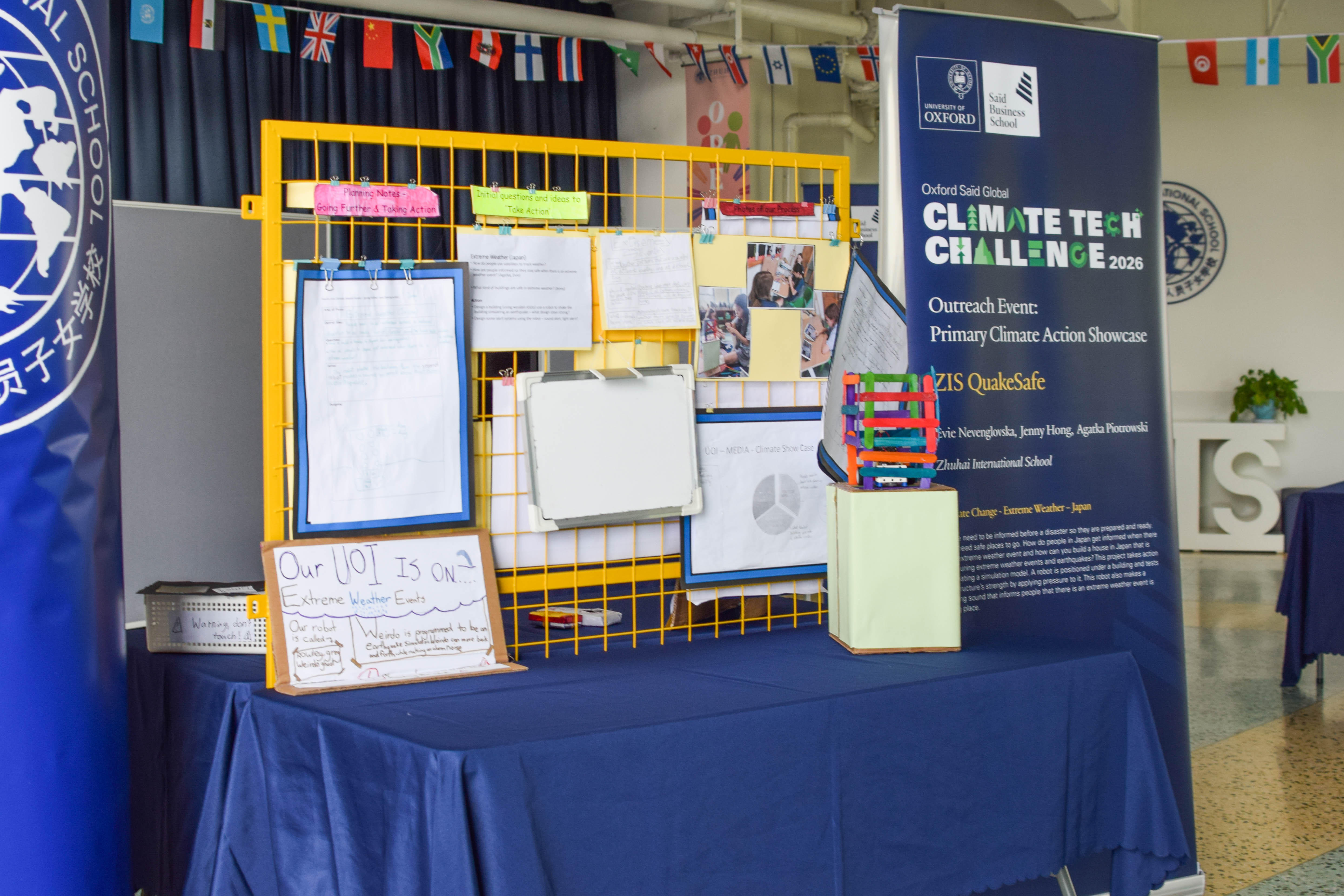
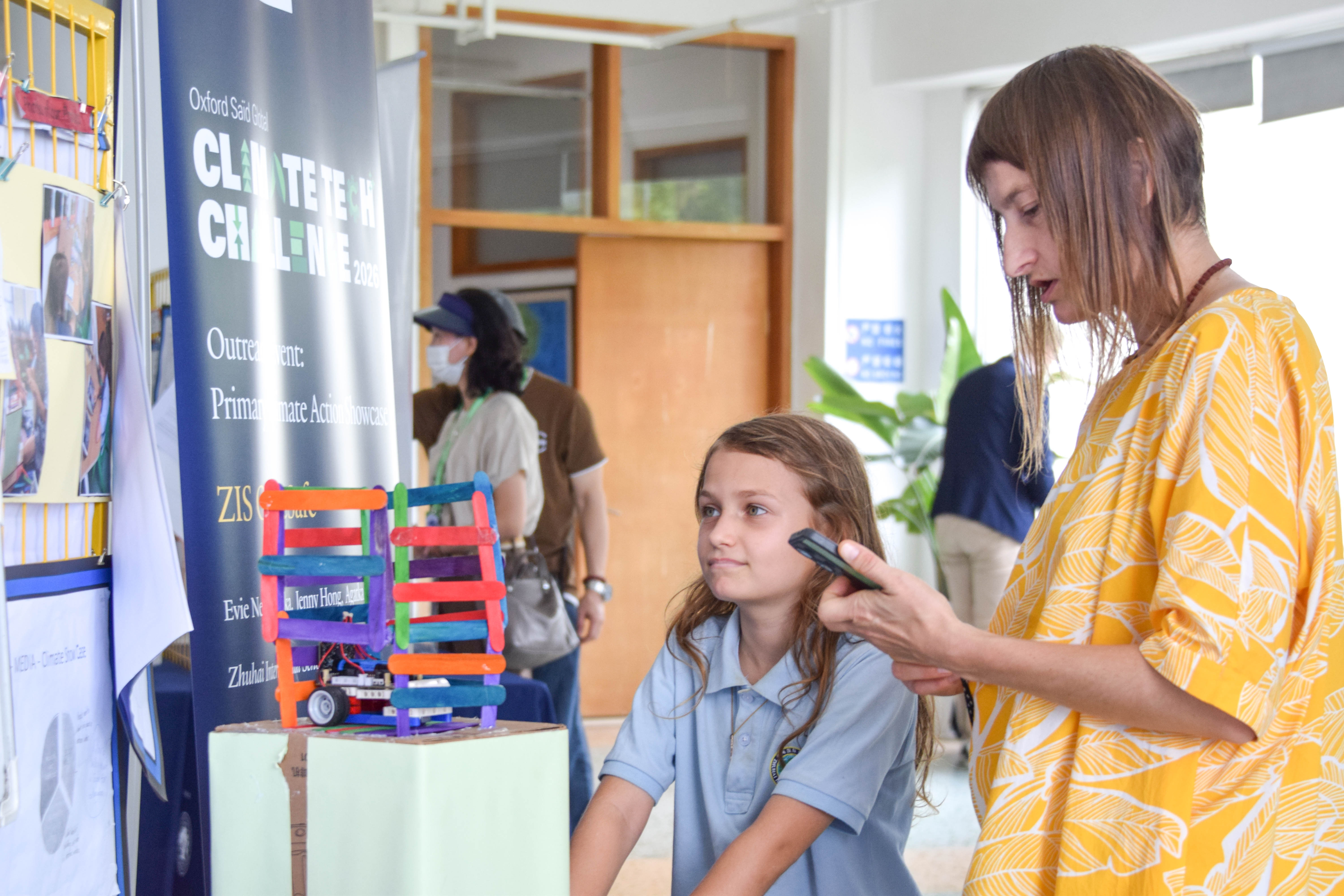
- ZIS Safe Signal and ZIS Cyclone Watch, which explored ways to provide early warnings before dangerous weather events.
- ZIS P.I.G., a robot designed to remove pollution from rivers before it reaches the ocean.
- ZIS FreshFlow, which examined how desalination systems could be maintained more effectively.
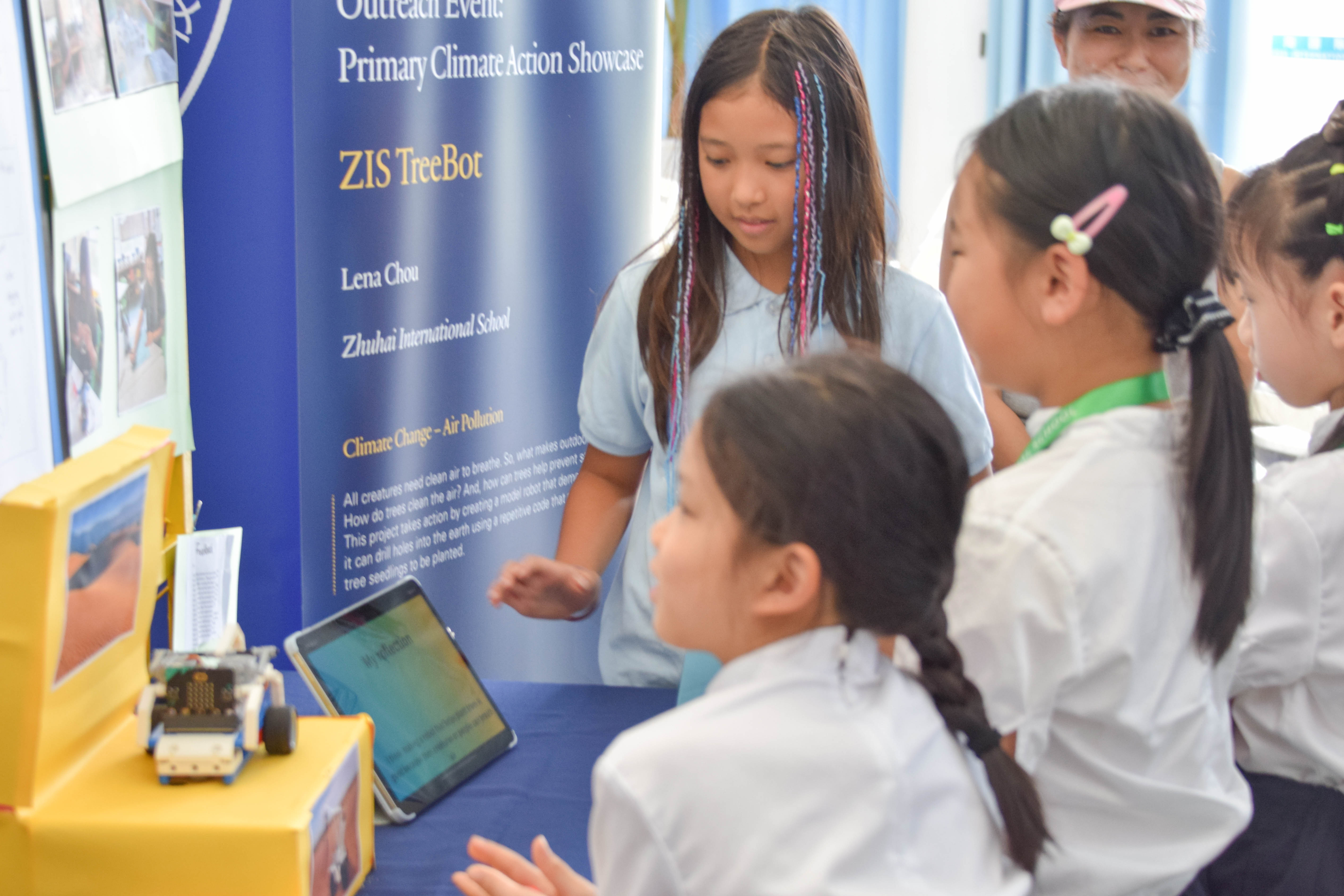
- ZIS TreeBot, a project that explored how technology could support tree planting to improve air quality.
Partner schools brought equally inspiring ideas, from improving air quality and preparing communities for disasters to designing more sustainable buildings and energy systems.
What impressed us most was the mindset behind the ideas. Students consistently focused on who their solutions could help and why they mattered.
Learning through action
Throughout the showcase, students developed a wide range of skills.
They strengthened research skills by investigating real-world issues and making sense of complex information. They built collaboration skills by working in teams, listening to different viewpoints and solving problems together.
Their creativity and critical thinking grew as they tested ideas, developed prototypes and refined their thinking. They also became more confident communicators, learning to explain their ideas clearly to different audiences.
Perhaps most importantly, students experienced what meaningful action looks like.
Rather than following step-by-step instructions, students decided what to investigate, which problems to address and how to turn ideas into solutions. They learned that they can take ownership of their learning and contribute positively, whatever their age.
An authentic connection to the PYP
The Climate Action Showcase aligned naturally with the Sharing the Planet unit of inquiry.
Students explored the idea that caring for the environment is a shared responsibility and saw how local actions connect to global challenges.
The experience also prepared students for the PYP Exhibition. They engaged in authentic inquiry, developed research and communication skills, collaborated and shared their learning with a wider audience.
Rather than learning about these processes in theory, they lived them.
Looking ahead
The impact on our school community has been significant. Students gained confidence and a stronger sense of ownership. Teachers saw the power of connecting inquiry to real-world challenges, while partnerships between schools grew through a shared commitment to sustainability and student agency.
There were challenges. We had to present climate issues in ways that empowered rather than overwhelmed young learners, while coordinating schools, timelines and projects around a common purpose.
Those challenges only reinforced the importance of keeping the experience flexible, inclusive and student-centred.
Looking ahead, we hope to involve more schools and create opportunities for students to participate in person and virtually. The more young people we bring into the conversation, the richer the learning becomes.
Takeaways
1. Start early
Young learners can engage with complex global challenges when learning is purposeful and age-appropriate.
2. Student agency matters
When students choose the questions they explore and the solutions they develop, engagement and ownership grow.
3. Collaboration strengthens learning
Working with other schools and organisations created richer opportunities than any one school could have achieved alone.
4. Climate action should be hopeful
Focusing on solutions, creativity and action helps students see climate challenges as opportunities for positive change.
5. Every student can be a changemaker
Perhaps the most powerful lesson was that meaningful action does not depend on age. When students believe their ideas matter, they begin to see themselves as people who can make a difference.
The Primary Climate Action Showcase began with a simple question about inspiring younger learners. It showed what is possible when students have the confidence, support and opportunity to turn curiosity into action.
