

By Heidi Stagner, Art Teacher, Eugene Field Elementary IB World School, Missouri, US

When I first walked into an IB art classroom years ago, something magical happened. Students were joyfully creating ladybug puppets, blending their science knowledge with art in a way that was both exciting and meaningful. That moment changed everything for me. I didn’t start out wanting to be a teacher, but witnessing learning in action, rooted in curiosity and creativity, set me on a path I’ve followed ever since.
Now, as an art teacher in the very same school I once observed, I’ve seen firsthand how the IB Primary Years Programme (PYP) transforms not only how we teach but also how we connect, reflect, and grow—both as educators and human beings.
Transdisciplinary learning makes learning stick
In the PYP, we don’t teach in silos. We connect ideas across subjects—because that’s how kids (and adults) naturally learn.
This year, when my fourth graders were having a tough time with fractions, I brought math into the art room. We painted pizzas and divided them into fractional slices. Suddenly, fractions weren’t abstract anymore—they were deliciously real. That’s what transdisciplinary learning does: it builds bridges across concepts and makes learning joyful, concrete, and memorable.
Joyful classrooms grow from play and curiosity
Kids love to learn. My job is to keep that joy alive.
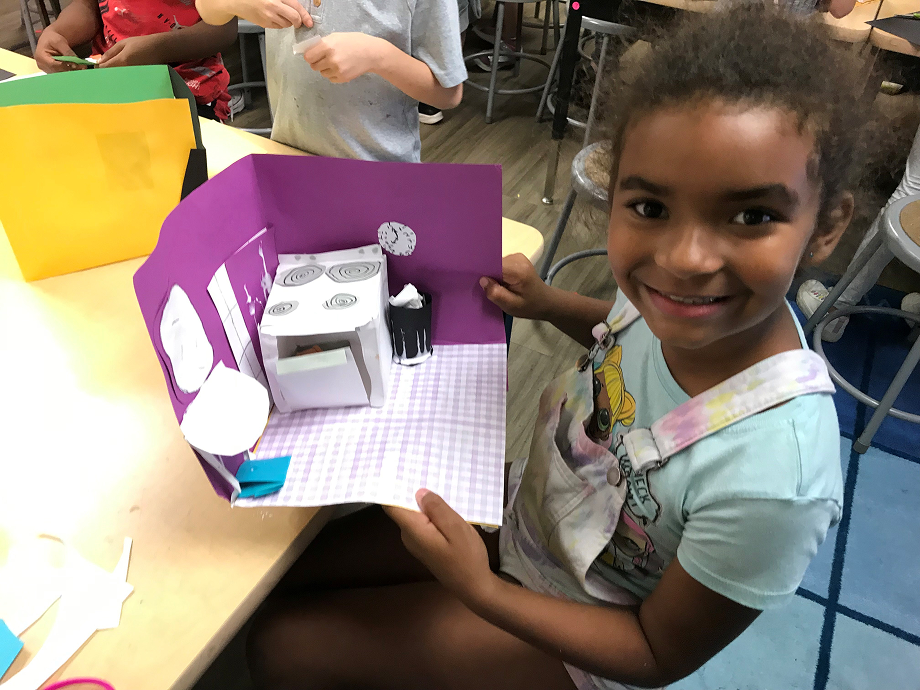
Whether we’re sculpting paper kitchens while learning about food systems or pretending to cook with clay, I intentionally design lessons that allow for play, exploration, and connection. My goal isn’t just to teach an art technique—it’s to nurture each child’s growth, personality, and love of learning.

Mentorship matters for students and teachers alike
When I started teaching, I was lucky to have caring, experienced art teachers who took the time to guide and support me. Their mentorship helped me grow—and now I try to offer the same to others.
We know from IB’s own research that strong relationships are key to teacher wellbeing. In our school, collaboration isn’t just a task—it’s a culture. We meet regularly, share ideas, solve problems together, and support each other as people.
Reflection is a superpower for everyone
One of the most important things we do in IB classrooms is reflect. I reflect on my teaching every day—what worked, what didn’t, and what I can improve. I also give students the chance to do the same. They think about what they learned, what challenges they faced, and how they grew.
Reflection isn’t just about academics—it’s about becoming more self-aware, intentional, and empathetic. It’s how we become better learners, teachers, and people.
Why IB? A personal and professional journey
As a teacher, I believe in the IB mission to “build a better and more peaceful world.” As a parent, I’ve seen its power in my own family—my son thrived in both PYP and DP, discovering a love for French and math that led him to pursue a double major in college.
IB is more than a framework—it’s a philosophy rooted in action, collaboration, and curiosity. That’s what inspires me and why I teach.

Final thoughts
Teaching in an IB World School has shaped who I am as an educator, a colleague, and a parent. It’s a journey of connection, creativity, and constant learning. I’m grateful to be part of a community that values not just what we teach, but how—and why—we teach it.
Takeaways:
- Learning is stronger when it's connected. Transdisciplinary teaching helps students see real-world relevance and deepens their understanding.
- Joy should be part of the curriculum. Creative play and student curiosity are essential ingredients in meaningful education.
- Mentorship sustains strong teaching communities. When teachers support one another, schools thrive.
- Reflection is essential for growth. Regular reflection improves teaching and learning and builds a thoughtful school culture.
- The IB mission inspires action. As both a teacher and parent, I’ve seen how the IB approach nurtures passionate, purposeful learners.
